• spindles
  • textiles
  • works
  • research
  • blog
  • about
  • publications & resources

eine Saite

  • spindles
  • textiles
  • works
  • research
  • blog
  • about
  • publications & resources

drought tolerance - notes from August

(from 20 August 2023, during a time of practice encouraged in the book Poetry as Spellcasting)

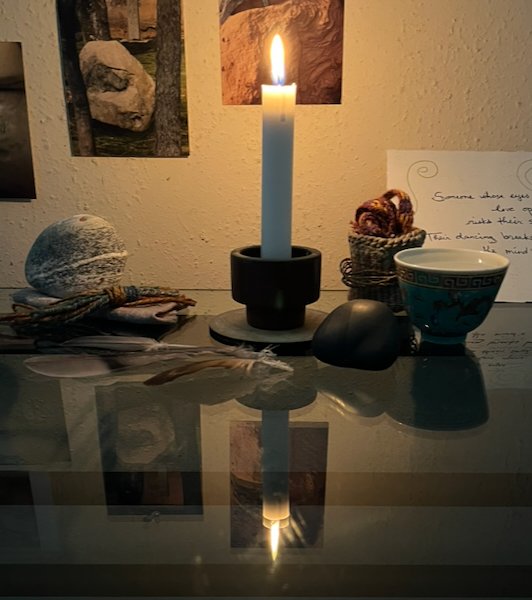
In the smoke of so many wildfires, I still light a small flame, to honor the element of fire, to acknowledge my relationship with this inscrutable source of heat and light, this relationship that does set humans apart — the ability to invoke fire, tend and use it. And will humans ultimately be destroyed by an excess of heat, having become too greedy with this knowledge and ability?

Is there any way to dial it back enough to simply live well, in some mode of harmony? That is the prayer in this candle and practice — a wish to be able to live well in relationship to everything around. The daily offering of water and flame activates an observance of our interdependence, these elements and the life I call me.

The smoke and drought make everything feel stark and struggling.

Breath and moisture are life, and 

drought-tolerant means 

knowing how to rest, 

how to slow essential processes 

to wait for the 

right conditions for flourishing
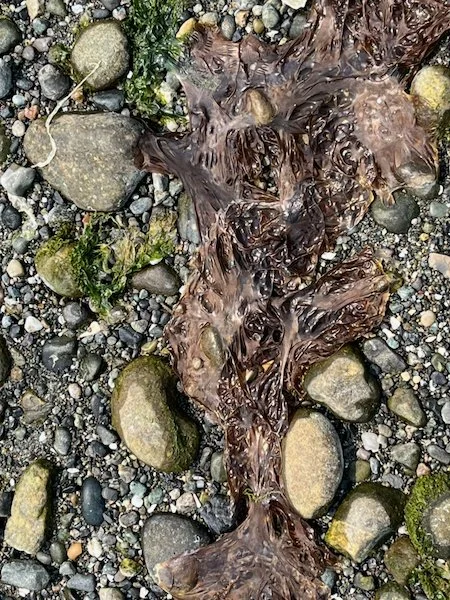
Rilke: “Künstler sein heißt: reifen wie der Baum, der seine Säfte nicht drängt und getrost in den Sturmen des Frühlings steht ohne die Angst, daß dahinter kein Sommer kommen könnte. Er kommt doch. Aber er kommt nur zu den Geduldigen, die da sind, als ob die Ewigkeit vor ihnen läge, so sorglos still und weit.” To be an artist means not to count or reckon but to ripen like the tree that does not force its sap and, trustingly, stands through the storms of spring without fear that summer will not come. It will come. But it comes only to the patient ones, who stand there with eternity stretching around them, quiet, vast, and free of worry. (Letters to a Young Poet, 23 April 1903, Barrows & Macy translation)

For Rilke, summer is the rich and ripening, fruitful time, whereas in my forest garden, the summer (from July onward) is drought and the time of patience.

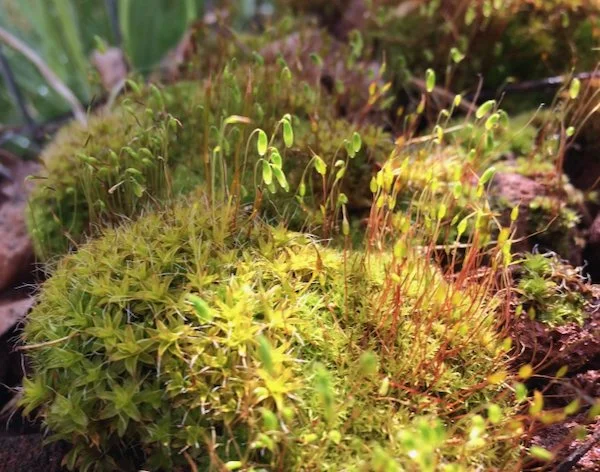
The notion of drought tolerance, learned from observing mosses, combines with Rilke’s poem from the Book of Hours (II,1): “jetzt mußt du in dein Herz hinaus/ wie in die Ebene gehn” — now you must go in your heart out, as into an open plain.

It’s a going inward and an opening out, the open plain is found in the heart. There’s a deliberate sinking into the interior, a dormancy that is not sleep or shutdown, but activated choice, exploration. It is Kevin Quashie’s sense of surrender: “a giving into, a falling into self” and Audre Lorde’s “when we begin to live from within outward…then we begin to be responsible to ourselves in the deepest sense,” and the guidance I took from them to “surrender to the vastness of inner fertility.”
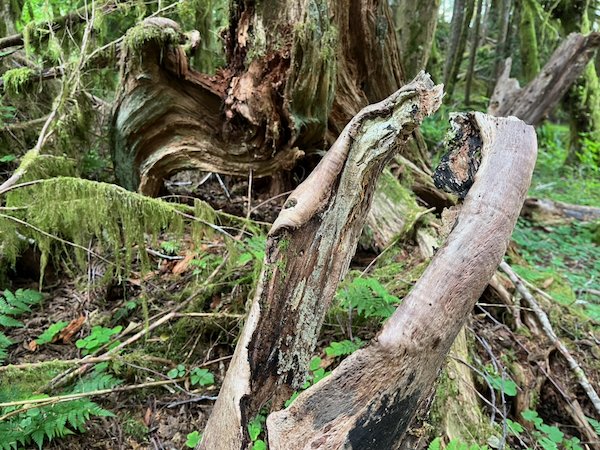
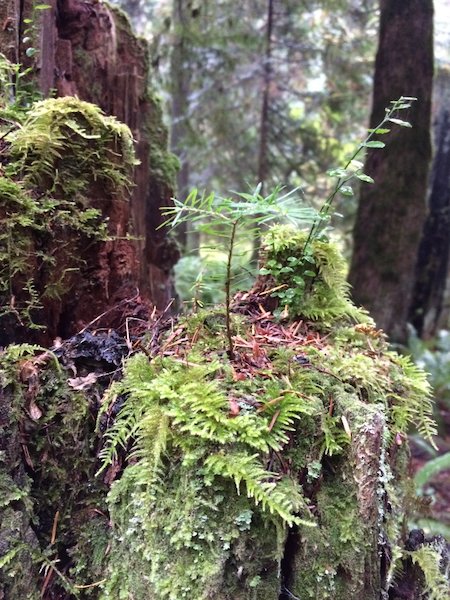
Forest shapes, trees inside out

The edge or seam (der Saum, another favorite word of Rilke’s) of the senses, which is the overlap of interior & exterior, where we balance to gauge what is needed for flourishing.
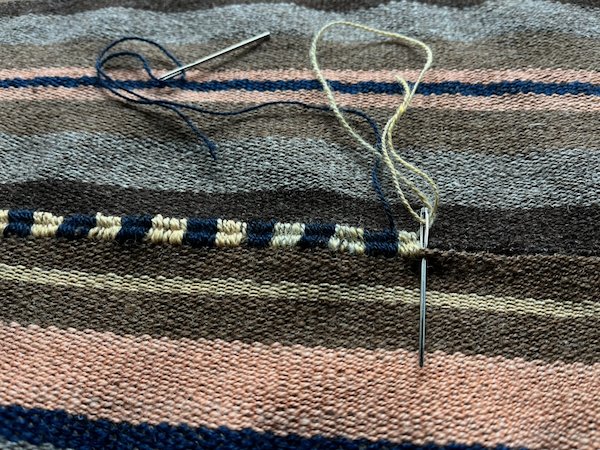
Speaking of seam, I’m working on the last two seams joining these narrow backstrap-woven pieces.
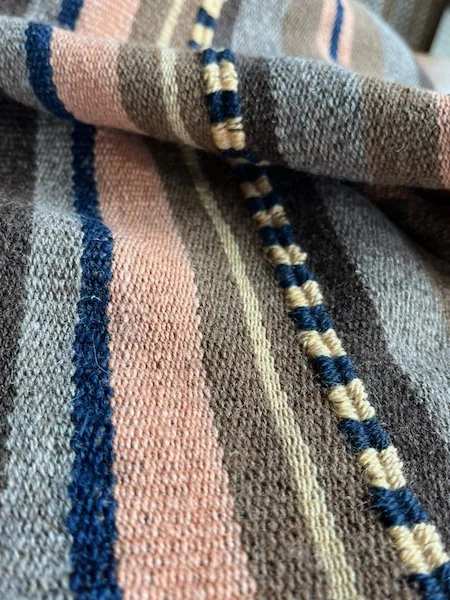
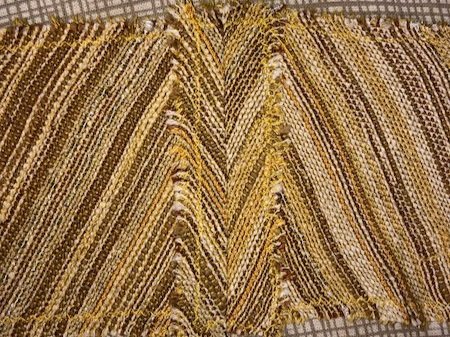
Handspun, handwoven cloth made of joined strips
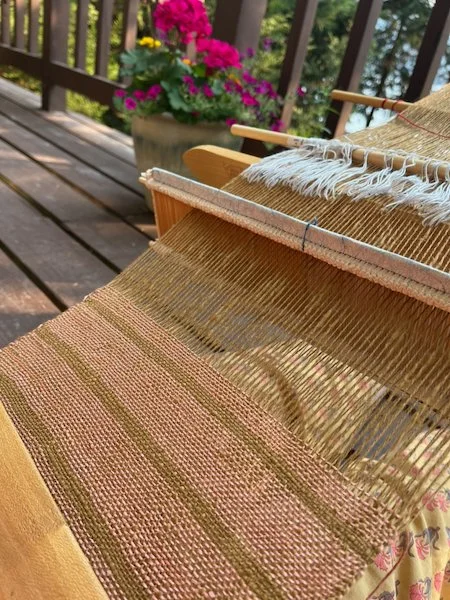
Current weaving, cotton and hemp cloth for the kitchen

Dormancy     as skill of waiting

and also actively sensing

             heightened attention at       the border of

inner and outer                der Saum, like a sewn seam, overlapped

what is the balance of interaction at that seam, what needs to flow

in or out, open pores or close

    breathe in or exhale

                       or hold   that    breath

                                                            protect and/or immerse

my waxy coating and stomata can do both

attuning across this         in/out

                                                  passage, adjusting equilibrium 

to close up          when opening is a danger

       and to risk expansion when

                the scent of beloved invites                         (August 2026)
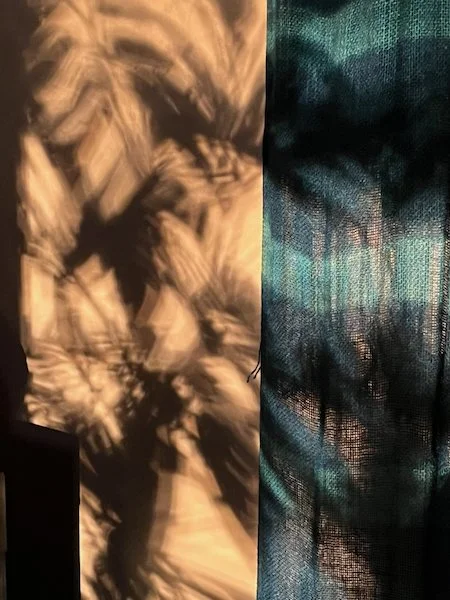
Evening light and wind making broken rhododendron shadows on the wall
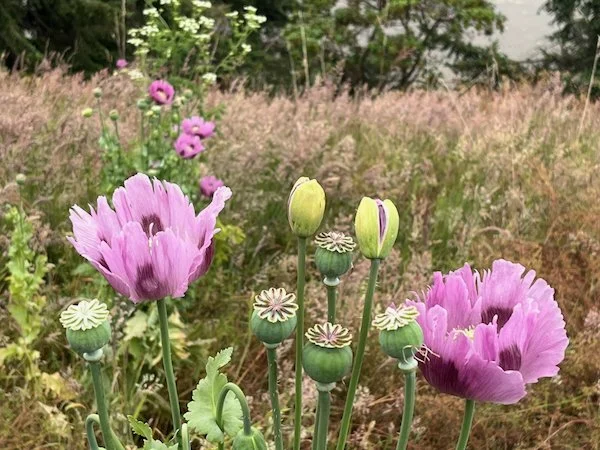
Poppies - ok, this happened before August, but their shapes and colors, against the grasses…!

Rilke: “in deinen werdenden Tiefen zu tauschen,/ wo das Leben sich ruhig verrät” - to plunge into your developing depths, where life quietly reveals itself (Book of Hours I, 14, my translation)

sinking, submerging, pooling, — entering into the silent space of potential with open receptiveness …also related to ‘sich sein eignes Dasein ausschöpfen’ - to scoop out one’s own existence, oneself, to the very end (Letters to a Young Poet,12 Aug. 1904)…. the open resonance within, ‘Geigenleiber, von murrendem Dunkel voll’ - violin bodies, full of murmuring darkness

The waiting that is not only waiting, although patience is paramount — one is participating in growth and unfolding, invisibly. It’s going on at the depths, but not without attention, deliberate and conscious surrender (to the vastness of inner fertility).

So dormancy, patient waiting, is a skill, and the living being has to be attuned to the subtle shifts in external conditions as well as the pace and processes inside. It’s a balancing on the edge, the hem, the seam, of one’s own senses, learning to know the interaction of interior and exterior, what is needed for flourishing, not just in terms of given conditions but also action, commitment, when to burst forth or flow, or reach and stretch. 

(24 August, 2023)

Where the liberated Elwha River meets the sea (I’ve visited and mentioned Elwha many times, and was surprised to see that the last time also included notes about Kevin Quashie’s book.
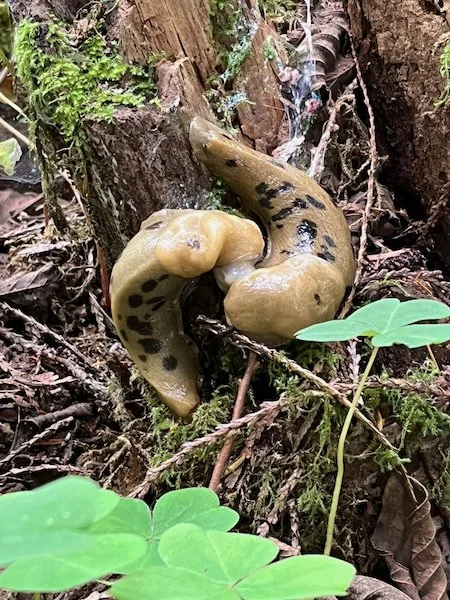
Banana slugs mating and making the sacred symbol of the heyiya-if, from Ursula K. LeGuin’s Always Coming Home

tags: rilke, poetry, moss, environment, forest, water, elements, poetryasspellcasting, ceremony, decolonize, weaving, backstrapweaving, backstrap, handwoven, handspunyarn, stitching, river
Thursday 08.13.26
Posted by Tracy Hudson
 

imagination

Wanting to write about Kevin Quashie, his book recommended by Leesa Renee often: The Sovereignty of Quiet, which sounded so compelling, and I knew it had to do with Black activism in some sense. But when I got it through interlibrary loan, come to find out it’s a literary studies book - Quashie is a professor of African American literature, and the musings and studies within this book are grounded in poetry, fiction, photography and film. Which fascinated me, as a student of literature and poetry (and, now that I think about it, what caused me to consider art and literature as separate from activism in the first place? That hegemonic education is showing its face again…)

At any rate, the quiet that Quashie is highlighting is a fruitful interiority, every expression of which got me excitedly writing notes. He defines it this way: Quiet is “a metaphor for the full range of one’s inner life… the interior – dynamic and ravishing – is a stay against the dominance of the social world; it has its own sovereignty. It is hard to see, even harder to describe, but no less potent in its ineffability.” 

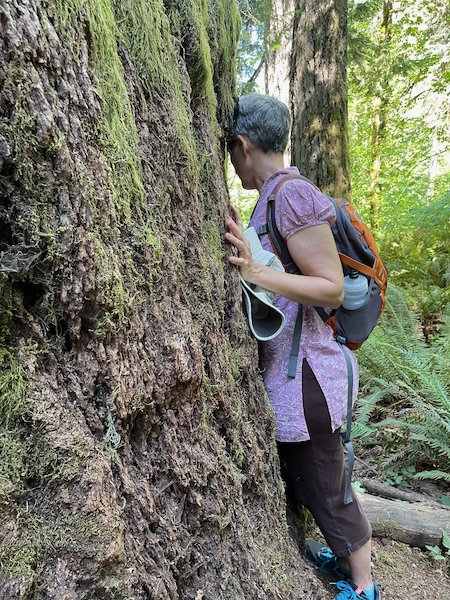
Greeting a huge elder fir near the Elwha River

He later explains that “the quiet subject is a subject… whose consciousness is not only shaped by struggle, but also by revelry, possibility, the wildness of the inner life.” This quiet is not a dampening, not at all the same as silencing, but an inner expansion of potential, an opening within that is not necessarily perceptible from the outside. Quashie calls the interior “expansive, voluptuous, creative, impulsive and dangerous…. not subject to one’s control, but instead has to be taken on its own terms.”

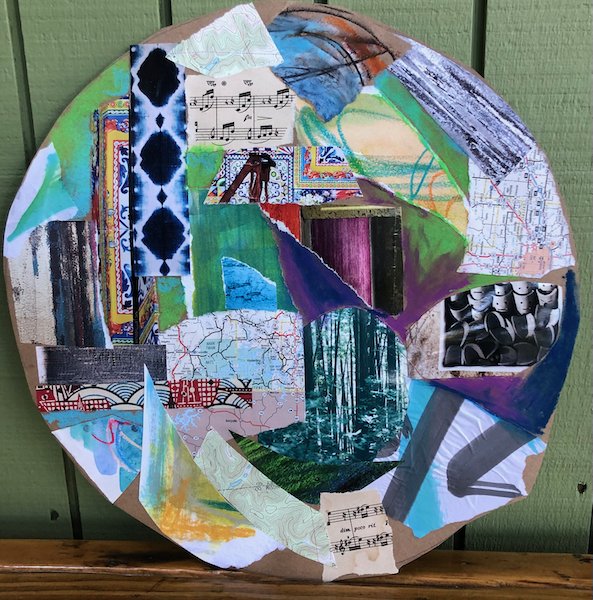
Collage ‘stepping stone’, part of an ongoing series

The examples illuminate how writers dwell in this quiet, voluptuous interior, and how it releases them from performance of expected roles and sentiments. Gwendolyn Brooks’ Maud Martha, from 1953, gives us a richness of consciousness that exemplifies self-contained power, in the simple truths of her daily experiences, which refuse to rely on a sense of plot, narrative trajectory, or the grand scheme of things. The woman, alive, alert, and perceiving things in her own way, is a lesson in the complexity of human life - something often denied to those being tokenized or asked to represent their community in lieu of themselves. Quashie explains, “The capacity to be animated by feeling is Maud Martha’s agency. It is not so much that she is naive to… social peril…; it is more that the beauty of the feeling, the tender and thrill of the moment, is more meaningful to her humanity.”

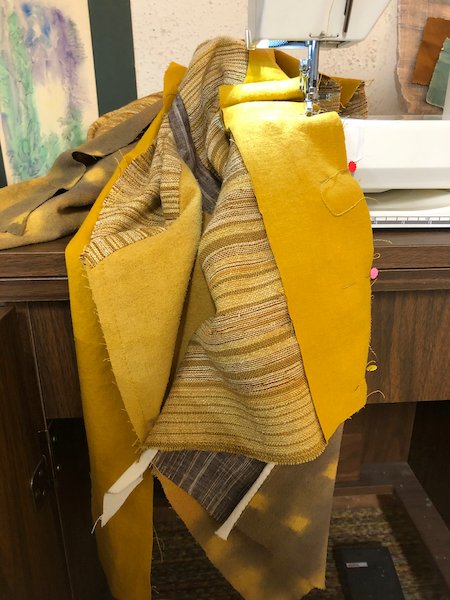
Handwoven cloth, being sewn into a Lichen Duster jacket, back of neck seam

The book builds on many other examples, including James Baldwin, and Audre Lorde, with whom I’m immersed at the moment, enhancing the themes of attention, curiosity, self-regard, community, and love, all of which gain flavor and influence in quiet. And then we are able to see how this gives strength for the inevitable struggle, having cultivated interior richness.

“To ask about the freedom within is to reimagine the collective such that the inclination to stand up for yourself is no longer limited to responding to the actions of others; instead, standing up for yourself means understanding your heart, your ambition, your vulnerabilities - it means engaging and living by these. Standing up for yourself is not oppositional, but abundant.”

My emphasis. That last line could be repeated again and again. It’s essentially the main theme coming out of this work, as I see it: the more people realize themselves, truly give voice and faith to who they can be apart from, and in spite of, the conditioned expectations, constraints, and delusions we all face, the richer we can all become, together.

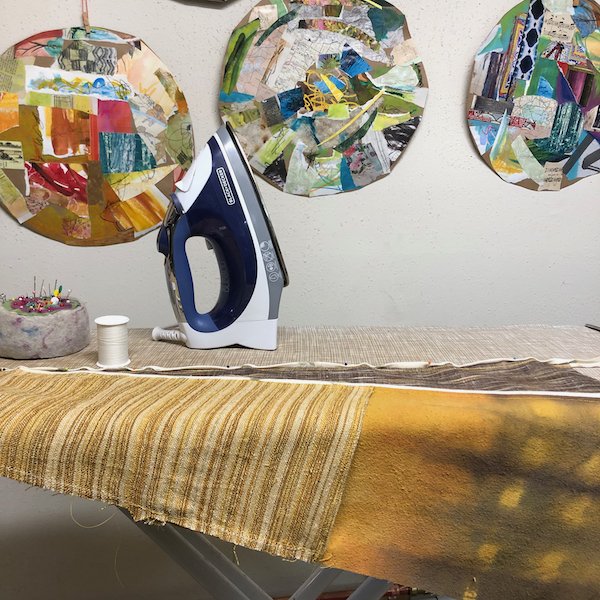
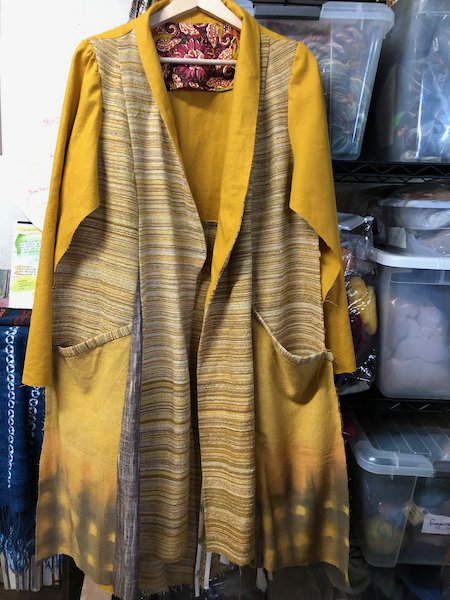
Lichen Duster in progress, using handwoven fabric, resist-dyed raw silk, and Khadi silk. Giving the seams Hong Kong finish. Collage stepping stones on the wall behind.

Done but for side seams and hem

Thus it felt like something coming full circle when I opened Kevin Young’s edited anthology, African American Poetry: 250 Years of Struggle and Song, and the first poem by the earliest published Black poet in America, Phyllis Wheatley, is On Imagination.

There are many facts of Phyllis Wheatley’s life (c. 1753-1784) that spark outrage and anger, from the sale of her person at auction before the age of 10, to the disbelief in her ability to write the poems she brought for publication, and later dismissive comments about the poems themselves by the likes of Thomas Jefferson. But apart from, and in spite of all that, she claimed for herself this interior landscape of promise and freedom, and her ode to Imagination is a song to this very possibility, a lyric confirmation of all that Kevin Quashie has been saying.

Imagination! who can sing thy force?

…

We on thy pinions can surpass the wind, 

And leave the rolling universe behind:

From star to star the mental optics rove,

Measure the skies, and range the realms above.

There in one view we grasp the mighty whole,

Or with new world amaze th’ unbounded soul.
…

At thy command joy rushes on the heart, 

And through the glowing veins the spirits dart.

(excerpted from On Imagination)

Waters of the Elwha river: cool, soothing, and free

It felt like some kind of lesson, to have the potency of interiority emphasized, over a span of centuries, from an enslaved woman, nearly denied the truth of her literacy, to a contemporary poet laureate. Urged by Quashie’s study, I’m paying attention and taking this emphasis to heart.

Rita Dove, from Thomas and Beulah:

Daystar

…

And just what was mother doing

out back with the field mice? Why,

building a palace. Later

that night when Thomas rolled over and

lurched into her, she would open her eyes 

and think of the place that was hers

for an hour – where

she was nothing,

pure nothing, in the middle of the day.

Elwha River, near Port Angeles, WA

And yes, I made a jacket using my own handwoven fabric. And that feels good. But I’ve been more compelled to share the poetry and surrounding thoughts. The Lichen Duster and a visit ot the Elwha River provide most of the visuals today, although they are only loosely related to the text.

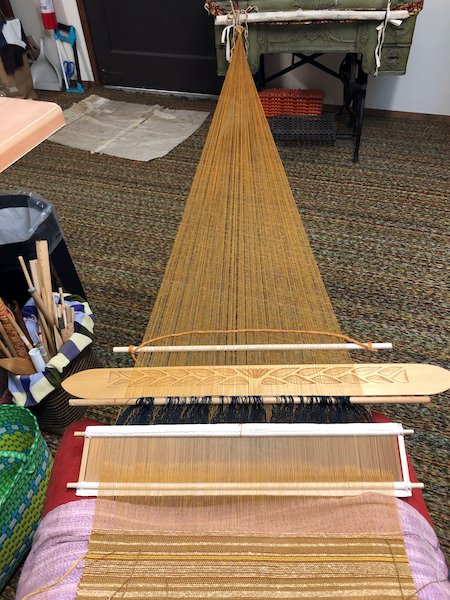
This was the warp for the fabric for the jacket - it was on the loom for quite a while. I wove about 6.5 yards of 14” wide fabric. The duster pattern is good for backstrap woven cloth, because the pattern pieces are narrow.

tags: elwha, river, cloth, weaving, clothing, backstrap, poetry
Sunday 08.28.22
Posted by Tracy Hudson
Comments: 1
 

awe

Intrepid mushroom

Somehow, reading about Chinese Internet celebrities who spend hours editing selfies and make millions by attracting followers to look at the selfies made it seem urgent to post about a few things I've seen and photographed lately. (None of which will be edited, except to resize.)

The mushroom above was growing by the road near my house, in the ditch. The ground would have been completely closed over it, but for the strength of the mushroom's growing, which pushed up a thick pile of mulch, leaves, and vines. It created its own cave as it grew, making space by spreading and pushing up, and I could see how fairy tales imagine entire worlds taking place underneath mushrooms just like this.

Where the Elwha meets the sea.

And this is the mouth of the Elwha, which I've visited several times now. It changes dramatically every season, reshaping the beach. At this time it was running high and muddy, about twice as wide as it was last time I was here. The river is carving out the shore so that the stones on the surface go right up to the edge of the water and stop abruptly - the shore is being scooped out beneath them where the sand is soft.

Elwha river shore

There are so many sights and experiences around here to incite awe, wonder, astonishment. And they are happening all the time. All I have to do is be there and keep noticing. The sharing of it feels urgent, though, especially while the 'attention economy' thrives on the sharing of drivel. As a counterbalance, just consider the mushroom, the mouth of the Elwha, and the last images for which I have very few words.

I recently saw that Annie Dillard and Mary Oliver say much the same thing about this type of experience and its value:

You were made and set here to give voice to this, your own astonishment. - A. Dillard

Instructions for living a life. Pay attention. Be astonished. Tell about it.  - M. Oliver

And in describing Denis Johnson's books, Will Blythe says that they "embodied an astonishment at the very nature of life, an attitude that is in itself sacred."

Light and the surface of water.... it transfixes me.


tags: nature, wonder, beauty, elwha, river, sea
Sunday 12.17.17
Posted by Tracy Hudson
Comments: 2
 

forest river texture

The first two have been lacking in my life lately, although texture has continuously been there. And I noticed texture was one of the most striking things about being back in a forest. The view below was beneath my feet as I sat on a rock.

The river itself is multi-textural, rushing through the rocks and eddying near the shore. This river, the Elwha, has a remarkable story that is in dramatic progress, with imminent and unpredictable change in its future.

In fact, the hike we did may be inaccessible once the waters rise, so it was a privilege to see the place as it is now. But mostly we were in the forest. It stuns me how quickly one is in the forest on the Olympic Peninsula.

Every tree has a different texture, from its own bark and from all the licheny, mossy, fungal growths happening.

There's not much to say when dwelling in this sort of world, but I wanted to share a few images, as well as the Elwha story.

tags: elwha, river, forest, moss
Tuesday 08.04.15
Posted by Tracy Hudson
Comments: 2
 

Powered by Squarespace 6